We face a choice: the power of Herod or the power of Jesus

This morning (Sunday 28th December 2025) I led worship at New Road Baptist Church in Coventry. I was honoured to be asked to do so, as this is the church that I attended for years when living in Oxford, and where I served as a deacon.

Below is the text of my sermon. To be clear: this is basically the text that I wrote beforehand but in practice I deviated from the wording at times and added in a few extra comments.

The picture below shows a scene from The Massacre of the Innocents by Leon Cogniet.

The sermon followed two Bible readings:

Matthew 2, 13-23

Hebrews 2, 10-18

King Herod was frightened. He was not frightened of an invading army, or violent rebels, or a rival politician, or even the Roman Emperor who had given him his power. He was frightened of a baby.

Who’s frightened of a baby? King Herod the Great, as he was known, understood something about power. He ruled over a sizeable chunk of the area that we now call Israel and Palestine, which was then part of the Roman Empire. Herod was declared by the Roman Senate to be “King of the Jews”. He was really a puppet ruler for the Roman imperial authorities.

So when the magi turn up and ask where the “King of the Jews” is to be born, Herod is alarmed. He is the King of the Jews! On one level, it’s a bizarre question. It would be like asking Keir Starmer where the Prime Minister is, or asking Donald Trump where you can find the person who really should be President of the United States.

So Herod tricked the magi, and asked them to let him know after they have found Jesus, so that he can visit him. His real purpose, we soon learn, is to kill him. That brings us to the part of the story that we heard earlier. This horrible, terrifying story that tells of how Herod massacred children to try to ensure that Jesus was dead.

Now this may not seem a very cheerful story to be discussing in the Christmas season! Sometimes we don’t know what to do with this story. It often isn’t included in readings at events such as Nine Lessons and Carols. If we include it in Christmas services, we are tempted to brush over it, an inconvenient disruption to the smooth flow of a comfortable story. Although today, 28th December, is observed particularly by our Catholic and Anglican friends as the Feast of the Holy Innocents, when these murdered children are remembered.

I want to suggest that recognising this horrible atrocity – and others like it – is very relevant to the hope and joy that we talk about at Christmas.

This is because the birth of Jesus isn’t simply a reason to feel cheerful for a day at Christmas. In Jesus, God is with us not only when we’re celebrating or feeling cheerful. God is with us however we’re feeling. Whether you love Christmas or dread it, Jesus’ birth is good news. The nativity is a story of hope in the midst of despair, love in the face of violence, solidarity in the depths of loneliness and power of a sort that the Herods of the world do not understand.

As we discussed earlier, Jesus was not visited by three kings, but by an unspecified number of magi, or wise men. Ironically, however, the story of Jesus’ birth in Matthew’s Gospel is a story with kings in it – not three kings, but two kings. On the one hand, we have King Herod, described by the Roman Empire as King of the Jews. On the other hand, we have Jesus, described by the magi as King of the Jews.

Thus Matthew’s Gospel places before two very different belief systems, two different sets of values, two different notions of power, two different calls for our loyalty – King Herod or King Jesus.

To understand this more, let’s get back into the details of the story. I think this account in Matthew’s Gospel is very relevant to life today. Scholars debate and disagree with each other about its historical accuracy. However accurate Matthew’s account is in historical terms, it is widely accepted by historians that Herod was a brutal ruler. I am not going to go into questions of precise historical fact now, however. I want to focus on how in this story Matthew presents us with truths about Jesus and about the choices that face us.

This story may seem to be full of things that seem alien to us, but if we dig a bit deeper, we will find many aspects that are really quite familiar. Herod had the sort of power that is maintained with violence and fear. I dare say he may not have been able to imagine a king who would reign in any other sort of way. Accustomed to violence and fear as he was, he responds to the birth of Jesus in the way he knows how. He orders a massacre of children in Bethlehem to ensure that the threat of Jesus is ended before it has begun. He is prepared to sacrifice the lives of many, many innocent children for that aim.

It is very hard to imagine the fear that must have gripped Mary and Joseph when Joseph was warned in a dream about Herod’s murderous plan. Did he wake up, screaming and crying perhaps? He must have woken Mary and told her about the dream. We can imagine them hastily picking up Jesus and grabbing what few possessions they could, all the while fearing that soldiers would burst through the door. That fear may well have gripped them every minute of every day until they made it to Egypt as refugees. And what of the fear and horror of the children who were killed, and their parents?

There are a few Christmas carols that do mention Herod’s massacre. The carol Unto Us a Boy is Born speaks of Herod killing the boys in Bethlehem “in his fury”. The Coventry Carol refers to Herod “raging”.

What rage? What fury? Matthew’s Gospel says that Herod was infuriated when he realised he had been tricked by the magi. But did he order this massacre in a fit of rage? Well, he might have done. But it’s also possible that this massacre was ordered not in a moment of anger but as a calm, calculated political decision. Perhaps Herod sat down with his advisers and concluded that the only way to be sure that he had dealt with the threat posed by this baby was to kill all the babies in the area.

Did Herod find some way to justify this massacre to himself? We can imagine Herod’s advisers gathering around him, telling him what he wanted to hear. Perhaps they feared that this surprising baby could become the focus for a new rebellion against Roman rule. I can imagine them telling Herod, “Well, your majesty, if this baby becomes a focus of rebellion, then there could be a violent uprising, and the Roman authorities will retaliate, and far, far more innocent people will be killed”. And they might go on. They might suggest that it is better to kill a few innocent children now so as to avoid a rebellion that could lead to far more innocent people being killed overall. 

Now that argument might not sound very convincing. But it is of course the sort of argument that certain types of politicians and commentators use all the time.

This year that is now ending, 2025, marks the 80th anniversary of the nuclear bombings of Hiroshima and Nagasaki. Nobody denies that those nuclear weapons killed innocent people – including far more children than Herod ever killed – but many will justify that massacre on the grounds that it saved more lives overall. There are people who are prepared to defend killings of Israeli children by Hamas, and other people who justify the killings of Palestinian children by the Israeli armed forces. Once you start talking about the “greater good”, you can end up justifying pretty much anything.

This is the sort of argument that the Herods of the world understand. This is the sort of power that they know about. What Herod could not have understood was that this Jesus was not merely a rival for the title “King of the Jews”. He posed a challenge to the whole structure of power and violence that Herod and the Roman Empire – and many others like them – represented.

The Herods of the world think that power comes with violence and control. Yet as he grew up Jesus lived so much by the power of love and justice that the Roman Empire considered him a such a threat that they executed him.

By the time Jesus was an adult, King Herod the Great was long dead. But Herod’s son, Herod Antipas, executed John the Baptist and was involved in the events leading to Jesus’ own execution. And the Roman imperial authorities to whom the Herods owed their loyalty made another attempt to get rid of Jesus. They thought they could rid of this troublesome Jewish peasant by crucifying him. He did not seem to have any power or strength in the way that the Herods and the Ceasars understand power.

But with Jesus’ resurrection, God confounded the world’s notions of power. The forces of sin and injustice were put on notice that their days are numbered. In Jesus we hear the good news that God’s subtle, transformative power of love and justice is on the way to winning. As Martin Luther King said, “the moral arc of the universe bends towards justice”.

Jesus calls us to live by his power. But unlike a tyrant who demands obedience, Jesus simply, gently invites us to follow him. As we heard earlier in the passage from the Letter to the Hebrews, Jesus is not afraid to call us siblings.

But it is hard sometimes to really trust in Jesus’ sort of power. We are all, I think, tempted at times to fall back on trusting in Herod’s sort of power.

Two weeks ago, I was in London, watching a group of far-right activists celebrating their racist, xenophobic and homophobic beliefs. These sort of rallies sadly happen quite often. What was unusual about this one, however, is that it was described as a “carol service” .

As many of you will know, a number of British far-right activists are claiming to defend Christianity and what they call “Christian Britain”. This is often a thinly veiled excuse to attack migrants, Muslims, Jews or LGBT+ people. On the platform at his bizarre event were several people dressed in clerical collars – clergy from fringe right-wing denominations, giving theological sanction to the far-right.

I cannot of course see into the hearts of the people on that platform. It is not for me to question the sincerity of their faith. Only God sees into their hearts, as only God sees into mine: God will judge them and me. But I can say that I do not recognise the Jesus who such people claim to be promoting.

Tragically, as Christians, we have all too often tried to turn Jesus into Herod. We have justified violence and coercion in Jesus’ name, we have insisted that Christians should have privileges in what we call a “Christian country”, and if we do not actually send people to kill the innocent, we shut the doors of our hearts and the borders of our countries and send people back to die.

Before we judge others for doing these things, let’s ask ourselves how often we have been tempted to slip back into trusting in Herod’s sort of power rather than Jesus’ power. Sometimes we are tempted to believe that only violence, coercion and privilege will be successful. If we find ourselves using the sort of arguments that Herod might have used, it is time to stop and think.

We are all challenged to make the choice between the power understood by the Herods of this world and the alternative sort of power embodied in Jesus. This is a challenge that faces us every day, in decisions big and small.

Of course, Jesus’ call is not the same for everyone. Jesus calls us to varied tasks and I do not think that he expects us all to agree about everything. But we do not have to share all the same views to take the power of Jesus as our starting-point.

And we will be tempted, and sometimes we will fail. We will face the temptation to trust in Herod’s power, to accept the idols of money, military might and selfishness. But as the Letter to the Hebrews says, Jesus himself has been tempted and he is able to help those who are being tempted. Every time we fail, God calls us again to turn around and follow the power found in a refugee baby lying in a feeding-trough.

Today and every day, in the coming year of 2026 and in every year, we face a choice: the power of the tyrant or the power of the baby. It’s up to us.   

________________________________________________________________________________________________________________

My book, The Upside-Down Bible: What Jesus really said about money, sex and violence (Darton, Longman and Todd, 2015) can be bought in paperback or e-book, priced £9.99.

Don’t let the far-right steal Christmas

I wrote an article for yesterday’s Morning Star, encouraging readers of all faiths and none to challenge the far-right’s attempts to co-opt Christmas and Christianity to promote values that are utterly at odds with the teachings and example of Jesus.

You can read the article on the Morning Star website, but it is also reproduced below.


Britain’s best-known fascist is angry about Christmas trees.

Tommy Robinson, also known by his original name of Stephen Yaxley-Lennon, has denounced Tesco for selling plastic trees as “evergreen trees.” He insists they should use the word “Christmas.”

Robinson and his followers have been ridiculed by people suggesting that the far right are too stupid to recognise Christmas tree unless they are labelled. But while Robinson is a nasty racist bigot, he’s not stupid. He’s clever, manipulative, and knows exactly what he is doing.

In this case, he is jumping into the annual Christmas culture wars. Every year, there are people who complain about local councils using expressions such as “winter lights” or “festive markets” without the word “Christmas.”

Speaking as a Christian, I think the birth of Jesus is more important than the name that corporations give to plastic trees. Many Christians find the controversy ridiculous. Sadly some other Christians get swept up in the outrage.

These are the people who the far right are trying to recruit. They insist that Britain is a “Christian country” and that British people must observe Christmas.

In reality, nobody is trying to stop them putting up Christmas trees (a German tradition), promoting Santa Claus (based on a Turkish bishop) or celebrating the birth of Jesus (a Middle Eastern refugee).

While the British far right often claim to defend “Christian Britain,” there has been a significant shift recently. At least three things have changed.

Firstly, far-right figures are focusing more on Christianity. This may be due to Robinson’s reported conversion in prison. I can’t read his mind, so have no idea whether he genuinely had a conversion experience. It seems, however, that he doesn’t think that turning to Christ requires him to repent of racism and violence.

Secondly, a handful of far-right clergy are making themselves more visible in working with Robinson at anti-migration protests.

Thirdly, it is increasingly clear that far-right groups are not only nominally pro-Christian but that a minority of their members are active churchgoers, some in mainstream denominations.

Far-right leaders hope to see movement in the other direction also. They want to draw Christians to their cause. Some are using slick, subtle and deceptive advertising to try to draw them in.

This Saturday, an event will take place in Whitehall called “Putting Christ Back Into Christmas.” It will involve carols and prayers and is organised by “Unite the Kingdom.”

It was Unite the Kingdom – whose aim is to divide the kingdom – who organised the far-right rally in London back in September, with speakers including Tommy Robinson, along with Elon Musk by video link. Musk – who is funding Robinson’s legal fees – said “violence is coming” and urged his listeners to “fight back.”

Other speakers included Brian Tamaki, a right-wing Christian preacher who called for all non-Christian religions to be banned.

None of this would be apparent to the casual observer of the carefully constructed video made to promote this supposedly innocuous Christmas carol event on Saturday.

The video begins with a cheery hello from Christian minister Rikki Doolan, who witnessed Robinson’s conversion in prison. The video does not mention that Doolan is an Islamophobic conspiracy theorist who belongs to the far-right Advance UK party.

A homely scene features a smiling Canon Phil Harris in a jumper and clerical collar. Many viewers will have no idea that Harris is an out-and-out racist who claims that Britain is being “overrun” by migrants who “seek to subdue us.” During the racist riots of 2024, Harris described the rioters as “concerned citizens.”

Only after a succession of people with crosses and clerical collars does Tommy Robinson appear. His name is not given.

The first hint that this is about nationalism is when far-right Pentecostal pastor Chris Wickland declares that this is “a moment for believers, families and patriots.” It is then stated that the event is organised by “Unite the Kingdom” – but not everyone will know what this means. It is quite possible for someone to watch this video without realising that this will be a far-right event.

It is vital that we expose the reality.

Thankfully, a number of left-wing Christians are committed to being present in central London on Saturday to make sure that a very different message is heard.

There will be various nonviolent events to challenge fascism, involving people of many faiths and none.

It is likely, however, that local far-right groups in various parts of Britain will try to misuse Christmas and Christianity to push their vile agenda. If your local anti-racist group, or union branch, or student society or other group is resisting this sort of thing, I suggest contacting local churches – and other faith groups – and asking them to join you in speaking out against it.

Whatever you make of Christianity, the New Testament tells the story of Jesus, who became a refugee as a child, who grew up to side with the marginalised, challenge the powerful, proclaim love for all and get executed as a rebel by the brutal Roman empire. Whether or not you believe he was resurrected, it is clear that his life and message are the opposite of the far-right’s pseudo-gospel of hate. Now is the time to say so. 

_______________________________________________________________________________________________________________

My book, The Upside-Down Bible: What Jesus really said about money, sex and violence (Darton, Longman and Todd, 2015) can be bought in paperback or e-book, priced £9.99.

Make sure no-one’s fooled by the far-right’s Christmas event

Well done to the Church of England, who have sharply criticised Tommy Robinson’s far-right Christmas-themed event planned for London this coming Saturday.

I was getting a bit frustrated with the CofE for their failure to condemn the event sooner, but I’ll happily put that aside and focus on the fact that they have done so now. In the case of some CofE leaders, they have done so more strongly than I had dared to hope.

The Baptist Union of Great Britain, the Methodist Church and the United Reformed Church had already condemned Robinson’s plans, along with various other churches and Christian groups.

Some Christians would prefer just to ignore the far right. I understand about denying them the “oxygen of publicity”. The problem is that if they’re already getting publicity for the lies they tell, we need publicise the truth.

Robinson’s and his band of far-right clergy have put out a slick and sophisticated video and social media posts. The video includes a handful of racist and homophobic clergy, mostly from tiny right-wing denominations. They claim that this event is “not political”. They clearly want to give the impression that this is an innocuous Christmas carol event.

Their propaganda seems to be working. I have been saddened and disturbed to read posts in Christian Facebooks groups from people either approving of Robinson’s rally or urging people not to condemn it. Some of these are not from out-and-out racists; some are even from people who might be considered theologically progressive.

The far right event is called “Putting Christ Back Into Christmas” and involves carols and worship in Whitehall on Saturday. It is organised by “Unite the Kingdom” (UTK), whose aim is to divide the kingdom. This is the group who organised the racist rally in London in September, which included violent assaults on people of colour and peaceful counter-protesters.

For resisting the far-right’s narrative, and for reaching out to people who are taken in by UTK’s claims about the nature of the event, there are some helpful resources out there:

  • The Centre for the Study of the Bible and Violence have collated a range of resources – from artworks to writings to discussion materials.
  • The Joint Public Issues Team – who represent the Baptist Union, Methodist Church and United Reformed Church – have links to various resources on their website.
  • Jon Kuhrt has written a helpful article contrasting the organisers’ claims about the event with Robinson’s description of it to his own supporters.
  • There will be some alternative acts of worship on the day, not all of which can be publicised in advance. Please let me know if you are interested in details (although I don’t know about all of them!).
  • There is a counter-demonstration for people of all faiths and none at Downing Street from 1pm on Saturday.

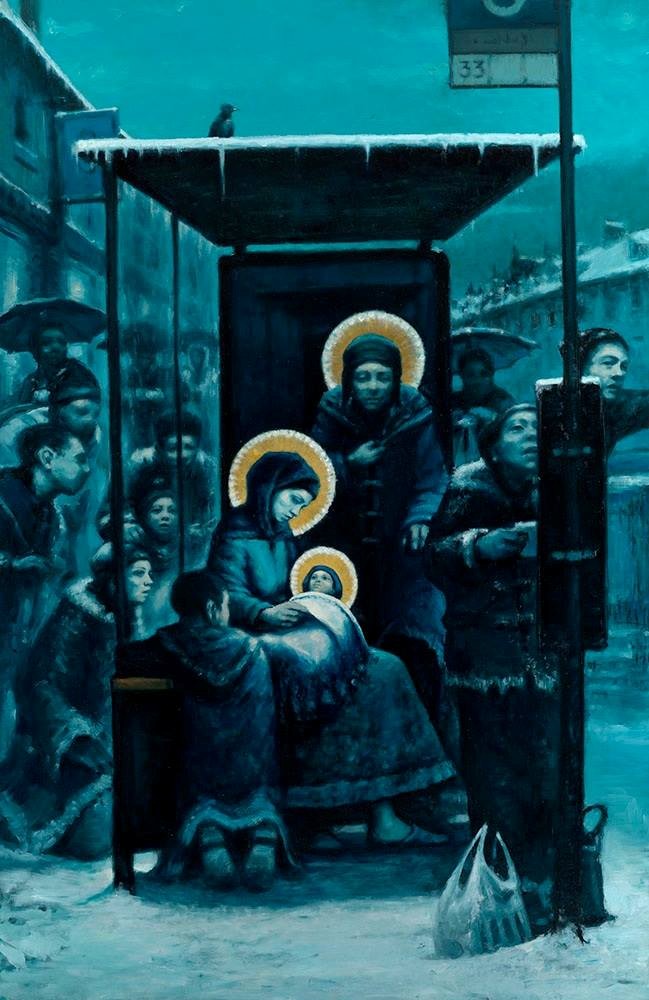
________________________________________________________________________________________________________________The above image of the Bus Stop Nativity is produced by Andrew Gadd, who is kindly allowing it to be reproduced for free.

Christians must take sides against the far right

The latest issue of the Church Times (5th December 2025) has published a letter I wrote in response to Christian leaders warning of the dangers of Christian nationalism.

You can read my original letter – along with others with different views – on the Church Times website. I have also posted the text below.

It is a relief to see Christian leaders warning of the dangers of Christian nationalism in the UK (News, 28 November). At the same time, I cannot help thinking that Churches as a whole are offering far too feeble a response.

While the British far Right has always claimed the mantle of Christianity, there has been a significant shift in recent months. Tommy Robinson and his allies have made their belief in “Christian Britain” a bigger focus, linking such rhetoric to attacks on Muslims and ignoring the reality that a significant percentage of migrants are Christians. While anti-migrant rallies have involved prayers led by clergy from tiny right-wing denominations, it is becoming clear that among the marchers are churchgoers from more mainstream Churches.

It is not enough for clergy to talk of “listening” to anti-migrant protesters. When far-Right leaders exploit concerns around housing and NHS funding, Churches can point out that there is enough for all if it is fairly distributed. Jesus calls us to love our enemies, not to be neutral in the face of injustice. When people are screaming racist abuse outside accommodation for refugees, let us not be afraid to take sides.

In a year in which the far Right has gained ground, now is not the time for dithering. We need to counter their preaching of hatred with a bold gospel-rooted vision that proclaims love for all and solidarity with the poor — born in Britain or outside it.

Father forgive us, we don’t know what we’re doing

Yesterday (Sunday 23rd November 2025) I led worship at Sherbourne Community Church in Coventry. It is always an honour to be asked to do so. Below is the text of my sermon.

To be clear: this is basically the text that I wrote beforehand but in practice I deviated from the wording at times and added in a couple of extra comments. However, the substance is much the same.

The sermon followed two Bible readings:

Luke 23, 33-43

Colossians 1, 11-20

There was nothing remarkable about the crucifixion of Jesus. That is to say, from the point of view of the Roman soldiers assigned to the job, there was nothing remarkable about the crucifixion of Jesus. The Roman authorities crucified people all the time.

It was a common form of execution for criminals, particularly for rebels and troublemakers. Revolutionaries were crucified, if they tried to rise up against Roman rule. Slaves were crucified, if they resisted their supposed owners. In the Roman Empire, crucifixion was a method of execution for people who defied authority, who did not accept their place in the order of things. It says something about the brutality of the Roman Empire that they used crucifixion to punish such people. And it was commonplace. For the Roman soldiers, it was, perhaps, all in a day’s work.

Jesus wasn’t even the only person they were crucifying that day. As we heard earlier, Luke tells us, “They crucified Jesus there with the criminals, one on his right and one on his left”.

I wonder if and when the soldiers realised that there was something very different about this particular victim. Perhaps it was when he told one of the other people being crucified that he would shortly be in paradise. Or perhaps it was earlier, when he said, “Father, forgive them, for they do not know what they are doing”.

“Father, forgive them”.

Forgiveness is not easy. Many of us do not find it easy to forgive people who have hurt us. How much harder would it be to forgive people as they are literally killing us? Could you forgive someone as they killed you? Could I? As I’ve never been in that situation, I honestly don’t know. I can only pray that God would give me the strength to do so.

Now in Coventry, of course, we’re used to seeing the words “Father, Forgive” displayed prominently. They’re written in the ruins of the old cathedral, destroyed by German bombing 85 years ago this month. I praise God that anyone in Coventry was able to think of forgiveness at the time of that bombing. There were others, I’m sure, who found it difficult or impossible to do so. But the story is well known. After the war, volunteers from Germany helped to rebuild Coventry Cathedral, just as volunteers from Britain helped to rebuild the cathedral in Dresden, where the old cathedral had been destroyed by British bombing. It’s a remarkable story of forgiveness and reconciliation, and a noble part of Coventry’s history.

So why were there people in Coventry and Dresden who were prepared to forgive the bombers? Because they were following Jesus’ example, perhaps? And that leads to another question. Why did Jesus ask his Father to forgive his killers? He wasn’t forgiving people because they were repenting. He wasn’t offering forgiveness to people confessing their sins. He was offering forgiveness to people who were continuing to sin in the most extreme way possible – they were literally murdering him! What did he mean when he said, “Father, forgive them, for they now not what they do”? Or to put it in more contemporary English, “Father forgive them, because they don’t know what they’re doing”?

Some people say it’s because the soldiers didn’t realise who Jesus was, they didn’t realise they were killing the Son of God. And of course that’s true. But at the same they knew they were killing someone. They knew they were crucifying someone. And crucifixion is one of the most painful forms of death that human cruelty has ever invented. So surely they knew some of what they were doing? 

Perhaps we’ll understand more if we ask why these soldiers were killing Jesus. As Christians, of course, we believe that Jesus’ death has significance for the whole world, and for all time. But I think we can understand how and why it does so if we think more about why Jesus was killed, why Jesus was executed, in the first place.

So who killed Jesus? These Roman soldiers, who we’ve just been talking about, who nailed him to a cross, who cast lots for his clothes, who mocked him and put up a sarcastic sign describing him as “king of the Jews”. They killed Jesus. Why did these soldiers kill him? Well, they were obeying orders. The death sentence had been passed by Pontius Pilate, the Roman governor of Judea.

Despite this, for centuries, many churches have taught that Jesus was killed by “the Jews”. It is still quite common to hear this. Like me, you’ve probably heard it said that “the Jews killed Jesus”. Indeed, I heard a street preacher in Birmingham say this only a few months ago. But it makes no sense.

Jesus was a Jew. Jesus’ first followers were Jews. His arguments with Pharisees and Sadducees were arguments among Jews. The gospels – particularly Matthew and John – draw our attention to the role of Jewish leaders in persecuting Jesus. But these were the Jewish leaders kept in place by the Romans, not chosen by the Jewish people. The High Priest of the time could keep his job only as long as he kept the Romans happy. These leaders were part of the influential Sadducee faction, resented and opposed by many other Jews for their collaboration with Roman rule.

I dare say that many of these people genuinely believed they could get a better deal for the Jewish people by co-operating with the Romans. John’s Gospel tells us that the High Priest, Caiaphas, feared that the Roman authorities would become so scared of Jesus’ preaching that they would brutally suppress the Jewish people as a whole. According to John’s Gospel, the High Priest supported the execution of Jesus because he thought it was better “to have one man die for the people than to have the whole nation destroyed” (that’s John 11,50). Perhaps all of us, at times, can convince ourselves that colluding with injustice will serve a greater good. Father, forgive us, because we don’t know what we’re doing.

But Jesus was sentenced to death by the Roman governor, Pontius Pilate, and killed by the Roman soldiers obeying Pilate’s orders. One of the oldest surviving Roman references to Christians, written by Tacitus in the early second century, says little about them other than that Christ has been executed by Pontius Pilate.

So why have churches for centuries claimed that Jesus was killed by “the Jews”? Well, it’s partly down to anti-Semitism. But also, blaming “the Jews” helps to ignore another awkward truth about the death of Jesus.

At times over the last few centuries, church leaders have been very powerful. They have shared an interest in preserving the status quo. To acknowledge that Jesus was executed by the Roman Empire would mean recognising that the Romans executed revolutionaries, troublemakers, slaves – people who got above themselves. It has always been awkward for some people to accept that Jesus not only sided with outcasts but defied authority and challenged the rich and powerful. Much easier to put the blame on “the Jews”.

Of course, Jesus’ resistance to authority went way beyond a simple political programme for the moment. He challenged all sin, all systems that divide people, all attempts to dismiss some people as less important than others. Love for all is a subversive message. Jesus proclaimed the “Kingdom of God”. In the Greek of the New Testament, this can also be translated as the “Empire of God”. No wonder the authorities of the Roman Empire considered this alternative empire to be a threat. As we heard earlier in the reading from Colossians, God has rescued us from the power of darkness and transfers us to the kingdom of his beloved son.

When we heard from Luke’s Gospel, we saw the soldiers mocking Jesus and saying, “Let him save himself if he is the Messiah!”. They imagined that if Jesus were really powerful, he would use force to bring about his will. To them, power was about violence and coercion. They were not used to the power of love that Jesus embodied.

“Father, forgive them, because they don’t know what they’re doing”. Well, the Roman soldiers knew they were torturing a man to death, even if they did not understand who that man was. But we might well consider them less guilty that Pontius Pilate and the other leading Romans who gave the orders. Similarly, when we think of the Luftwaffe bombing Coventry, the bombers surely knew they were killing innocent people, even if they did not understand the full impact, but we might want to put more blame on the Nazi leaders who sent them to drop the bombs.

Powerful leaders who give orders, however, are powerful only when people obey their orders. At the same time, to refuse those orders can take almost unimaginable courage unless others do so at the same time. Members of Hitler’s armed forces who did refuse orders were executed almost immediately. Amazingly, some refused and accepted death. But it is hard to judge those who didn’t. So the cycle of sin goes round and round, at times appearing like it can never be broken.

Some years ago, I sat in a café in Jerusalem interviewing an Israeli ex-soldier who had decided to refuse his call-up to the reserves. He had wanted to follow his conscience by treating Palestinians with respect when he was manning checkpoints. But he had come to the conclusion that by serving in the army at all, he was helping to uphold an unjust occupation. He said something which has stuck with me. He said, “You cannot live morally in an immoral system”.

The problem of course is that all of us, to one extent or another, are part of immoral systems. Sometimes, the Kingdom of God breaks through, witnessed in moments of kindness, acts of love, and campaigns for justice. But all of us, nonetheless, are complicit even in the sins that we seek to resist. For example, however ethical you try to be, it is almost impossible not to buy at least some products that have been produced unethically. This is not a reason just to give up and not think about ethics when you buy things! Nor is it a reason to beat yourself up and become obsessive so that you never buy anything unethical, as if that were possible. It is a reason for humility, to recognise that we are all broken people in a broken world, that we commit the very sins against which we protest, that we will constantly mess up even as we pray that God will help us to improve the way we live and to change the world around us.

Sometimes in our confusion, all we can do is to turn to God and say, “Father, forgive us, because we don’t know what we are doing”. And we pray that God will transform us, transform each other, transform our communities and our world.

This is where the historical details of Jesus’ death point to its meaning for all time. To the Roman soldiers who hammered in the nails, perhaps it was just another day at work. To the Roman authorities, this was just another troublemaking Jewish peasant who could easily be killed off. Perhaps to the High Priest and his colleagues, this was just another necessary compromise.

But it didn’t work. Crucifixion was supposed to crush people who resisted authority. But resurrection is the ultimate example of resistance to authority: when you’re executed by the state, you’re supposed to stay dead. Jesus, the sinless human being, defeated sin. The divine human being defeated death.

Jesus rose from the dead, because the forces of sin and violence could not hold him. Yes, sin and injustice still have much power in the world. We are still compromised by them and entangled with them. But with Jesus’ resurrection, the forces of sin, oppression and empire are put on notice: the final victory of love and justice is assured, the salvation that comes through grace and forgiveness has begun. As Colossians puts it, in Christ we have redemption, the forgiveness of sins. All the power of a mighty empire, all the mockery of armed men, all the cynicism of casual violence, are no match for the power of love embodied by the Christ who in the midst of unbelievable horror says simply “Father, forgive”. 

________________________________________________________________________________________________________________

My book, The Upside-Down Bible: What Jesus really said about money, sex and violence (Darton, Longman and Todd, 2015) can be bought in paperback or e-book, priced £9.99.

I’m a Christian, and I don’t give a toss what Tesco call their trees

Some people are getting very angry with Tesco for calling their Christmas trees “evergreen trees”. The usual claims of “they’re banning Christmas” are especially loud this year, backed not only by the usual culture warriors but by full-on violent far-right figures such as Tommy Robinson.

In a year that has seen the far-right advance further in the UK than at any time for decades, they’re making big claims about defending Christianity. They are backed by a handful of far-right clergy, mostly in tiny denominations, and unintentionally helped along by a greater number of clergy and churches who are dithering about how to respond.

As well as talking endlessly on social media about Christmas trees, the far-right are trying to drum up Christian support by getting angry about Christmas markets being called “festive markets” and local councils putting up “winter lights”.

Culture warriors and right-wing nationalists say that people are trying to “ban” Christmas. In reality, nobody is doing anything to stop them using Christmas Trees (derived from a German practice) or traditions of Santa Claus (based on a Turkish saint) to celebrate the birth of Jesus (a Middle Eastern refugee). With no sense of irony, they will do all this to show how British they are.

It is not the name changes, but the people who jump to criticise them, who are trivialising Christmas.

I celebrate the birth of Jesus because it is about things far more important, exciting and life-changing than what what a corporation call their plastic trees.

There will be hundreds of people sleeping rough in unbearably cold weather on Christmas night. There will be many, many more freezing indoors because they can’t afford the heating, while others remain on seemingly endless waiting lists for physical and mental health needs. And that’s just in the UK. Might Jesus not be more concerned about meeting these people’s needs than about whether celebratory trees bear his name?

If you go on Twitter (or “X”), it quickly becomes clear that the far-right’s love of Christmas trees is less about supporting Christians and more about attacking people of other faiths, particularly Muslims. They claim that Tesco and local councils are avoiding the word “Christmas” so as not to “offend” Muslims. I don’t know how many Muslims these people actually speak to, because in reality it would be quite hard to find many – or any – Muslims in the UK who are offended by Christians celebrating Christmas, let alone people who want to “ban” them from doing so.

It is easy to laugh at the far-right’s absurdity. Indeed, sometimes I do. But we are in danger of overlooking a serious threat. Far-right rhetoric has become mainstream in the last year in ways that some of us could not have imagined. With Reform UK leading in the opinion polls and a Labour government pandering to their rhetoric, this is not the time for churches to faff about.

Neutrality in the face of injustice is no part of the calling of a Christian. We must speak out firmly against the far-right’s claim to be defending “Christian” Britain. We must uphold the value and dignity of all human beings as central to what the New Testament, and Christian discipleship, are all about.

If churches don’t act clearly and strongly against the threat, the far-right will advance further. And they will advance in British churches.

There is a lot of talk about “listening” to the concerns of far-right protesters and so on. Of course Christians should listen to everyone. That does not mean we should be neutral about them. We need to listen and challenge. We should be open to challenge ourselves of course. That is no excuse for inaction.

Ironically, it is within Christian teaching that we find the very means to resist people while also listening to them and not hating them. Jesus taught the love of enemies. Paul and other New Testament writers also taught the love of enemies. The love of enemies is central to Christian ethics. It is odd how rarely we talk about it in most churches.

The love of enemies does not mean having no enemies.

Racists are our enemies. Fascists are our enemies. We are called to love them. We are called to see the image of God in them and recognise them as equal human beings. And we are called to stand against them, oppose and speak out against all that they stand for. Love is not neutrality. Love is not passivity. Love is a refusal to descend to the level of those who preach hatred.

Middle class Christians sometimes talk unhelpfully about far-right protesters’ “legitimate concerns”. They often mean concerns around housing, NHS funding and so on, which the far-right blame on migrants. Of course it is right to be concerned about such things. It is not remotely legitimate to blame migrants for them. We need not only to listen to the concerns but to challenge the narrative that the concerns are misused to justify.

I suspect that many far-right leaders know that migration is not the cause of these problems, even if their foot-soldiers have been fooled. Instead of legitimising the far-right’s arguments, we need to put forward a bold alternative vision that champions the rights of migrants and people born in Britain to decent housing and healthcare and public services. These problems are caused not by migration but by inequality and sinful economic structures.

As Christians, let us speak up for the Christ who championed the poor and marginalised, urged the rich to repent, resisted unjust systems and broke down barriers that divided people based on nationality or prejudice.

This is the Christ we need to proclaim loudly at Christmas. This call for love and justice is what Christmas should be about – not the names of commercial trees.

________________________________________________________________________________________________________________

My book, The Upside-Down Bible: What Jesus really said about money, sex and violence (Darton, Longman and Todd, 2015) can be bought in paperback or e-book, priced £9.99.

The Gospel of Hope on Remembrance Sunday

On Remembrance Sunday a week ago (9th November 2025), I had the honour of preaching at Renew Inclusive Church, a Baptist church in Cambridge. They are very hospitable and made me very welcome. Below is the text of my sermon.

Although this is the text that I wrote beforehand, I deviated from the wording slightly in practice. However, the substance is the same.

The sermon followed two Bible readings:

What does the word “Remembrance” mean to you?

It seems that the meaning of the word “remembrance” isn’t quite the same as the meaning of the word “memory”. They sound like they should mean the same thing. But we use them differently. “Remembrance” isn’t just something we happen to remember. It’s something we choose to remember. And we’re used to this in Christian worship. When we take Holy Communion later, we’ll hear Jesus’ words: “Do this in remembrance of me”.

So remembrance involves choice: choosing to remember. And often, that isn’t easy. When we remember Jesus being killed, we remember a crucifixion – a human being killed. It’s not easy to think about. Sometimes, when we think about death and suffering, it is easier to forget. Or at least, it can feel easier in the moment to bury painful memories, to ignore difficult feelings, though of course that often turns out to be more difficult in the long run.

On Remembrance Sunday, we are invited to remember war. that is difficult. It is unimaginably difficult for people who have experienced war directly. Those of who have not experienced war directly, or who have only witnessed it from the margins, can be tempted to sanitise war. Instead of listening to the experiences of those who have gone through war, we may talk of honouring them – and then quickly move on.

But suffering isn’t easy to talk about. You might have experienced this if you’ve been bereaved, and well-intentioned people have – understandably – tried to say reassuring things when perhaps what you really need is someone to recognise just how terrible you feel. 

But whether we have experienced war directly, whatever we believe about the rights and wrongs of this war or that war or war generally, we all know that war is indescribably horrific. And if we are serious about remembering war, we have to face reality with honesty.

We do ourselves no favours if we pretend that remembrance is straightforward, easy or uncontroversial. Let’s have the honesty to acknowledge that remembrance is a painful – and often controversial – subject. In the first few years after World War One ended, wealthy people marked the anniversary of the Armistice on 11th November each year by holding a Victory Ball to celebrate. Veterans, struggling with poverty, demonstrated outside the Victory Balls in protest. My own great-grandfather, who fought at the Somme and won five medals in World War One, had to pawn all five of his medals after the war to feed his family. Gradually, the anniversary was marked in a more sombre way. But in 1921, veterans protested against their ongoing poverty by marching past the Cenotaph with pawn tickets pinned to their lapels instead of medals. It was an embarrassment for the government.

Remembrance continues to throw up difficult questions. What should we remember? How should we remember? Who should we remember? Many of us understandably want to remember those with whom we have a personal connection, perhaps people who we know or knew, perhaps those from our own area or who consider to have been on our own side. At the same time, let’s recognise the truth that most people who suffer in war, even most people who fight in war, have limited choice even as to which side they are on. I mentioned that my grand-grandfather fought at the Battle of the Somme. I’m very aware that if he had been born in Berlin instead of Birmingham, he would have fought on the other side at the Battle of the Somme. I’m sure many of you can think of similar examples from your own lives or your own families.

I suggest that the demands of truth, and the Gospel’s call to love our neighbour, mean that we should seek to remember victims of war of all nationalities on Remembrance Sunday. To remember the past is to learn from it. I dare say there are various views in this room about what lessons we should learn from war and about how we build peace. But the good news of Christianity is not about pretending that everything’s okay or that we have all the answers. The Gospel is not a trite reassurance. It’s about hope amidst horror. We have no business proclaiming the hope of the gospel if we do not recognise that we are broken people in a broken world, if we do not recognise the depth of the suffering into which we proclaim good news. We do not have all the answers. We look to God to guide us as we search for them.

Earlier we heard from Matthew’s Gospel, from a passage about unfathomable violence – about a massacre of children. Can any of us imagine anything more horrific? In the world today, civilians make up as much as 90% of war casualties, and the killing of children is – appallingly – not a rare event. Yet Matthew describes this horror right in the middle of the story that proclaims the hope that comes with the birth of Jesus and the failure of Herod to defeat him. Jesus brings hope amidst the horrors of violence, death and war.

I’m sure there are varied views in this room about what lessons we should learn from war, and about how we build peace. I suspect many of us do more to build peace than we realise. I have the privilege of working in a multifaith chaplaincy at Aston University in Birmingham. Every week, I see students reach across divides to build understanding with people who are different to themselves. In Welcome Week in September, I saw students of varied nationalities, faiths, personalities, cultures and sub-cultures simply start chatting, eating and playing games together in the Chaplaincy. It was just after there had been a spate of far-right protests outside accommodation for asylum-seekers, just as parts of the media were stirring up anti-migrant feelings and dividing people against each other, yet here at the grassroots in a university campus, ordinary 18-year-olds were unconsciously defying the hatemongers with their everyday reactions. In the Chaplaincy, I have sat and drunk tea with the President of the student Palestine Society and one of our university’s most pro-Israeli students, simply because they both happened to wander into the Chaplaincy at the same time. I thank God that that they did. I sometimes think our students could do a better job of sorting out the world’s problems than the politicians and diplomats. They restore my faith that God can lead “ordinary” people to achieve reconciliation and resolve differences; to build peace.

Martin Luther King spoke of two forms of peace: a “negative” peace, which is only the absence of conflict, and a “positive” peace, which involves the presence of justice. He insisted that building peace does not mean avoiding conflict. Indeed, building peace might put us in conflict with those who uphold injustice. But King encouraged people to engage in conflict nonviolently, with love for enemies and with a hope of reconciliation.

These two forms of peace – negative and positive – are very much on show in the New Testament.

The Roman Empire claimed to bring peace to the places they conquered. The Roman authorities said they offered conquered peoples “peace and security”. This supposed peace consisted of an absence of conflict. And there was no visible conflict because it was violently suppressed. With their enemies killed, there was no-one to disturb the “peace”! The apostle Paul mocked the Roman Empire’s claims about peace. In his first Letter to Thessalonian Christians, he wrote, “Just as they are saying, ‘There is peace and security’, sudden destruction will come upon them” (that’s 1st Thessalonians 5,3). To his original readers, it would have been obvious that the people saying, ‘There is peace and security’ were the Roman authorities. Paul and his readers knew that that the Empire had not brought any real peace or security.

In contrast to the fake and brutal peace of the Roman Empire, the New Testament offers us the just and lasting peace of Jesus Christ. “My peace I give to you,” says Jesus to his followers at John 14,27. “I do not give as the world gives”. This is a different peace to the imperial stifling of conflict or dissent. This is the peace demonstrated by Jesus in the nonviolent defiance of turning the other cheek. This is the peace of the upside-down Kingdom of God in which the last are first, the poor are blessed, the weak are strong and power is found in love.

Let us remember war with honesty to recognise its horrors and moral confusions. Let us remember war with humility to learn from those who have experienced it differently or more directly than us. Let us pray that God will guide us in learning as we remember, so that we may work with others to build peace – not the peace of trite reassurance, or the avoidance of conflict, or the suppression of dissent, but peace built on the justice of the Kingdom of God proclaimed by Jesus. So that as we learn from the realities of war, God will give us the hope, and show us the tools, with which to beat our swords into ploughshares and our spears into pruning-hooks.

If we’re not preaching good news, we’re not preaching the Gospel of Jesus Christ

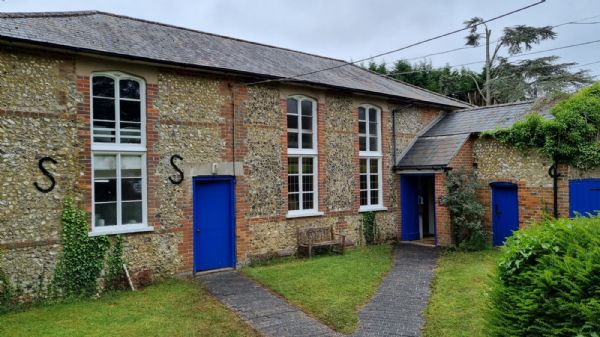
On Sunday 11th October this year, I had the honour of preaching at Kingshill Baptist Church in Buckinghamshire (pictured). The village of Little Kingshill is a more rural location than I am used to preaching in, but they challenged my assumptions about rural churches by being a very lively, active and welcoming congregation. Below is the text of my sermon.

Although this is the text that I wrote beforehand, I deviated from the wording slightly in practice. However, the substance is the same (the content overlaps partially with my sermon in Oxford the previous week, which you can see in my previous post).

The sermon followed two Bible readings:

Several times a week, I walk between New Street station in Birmingham, and Aston University where I work as a chaplain. One day I was walking back to the station after quite a tiring day and I passed one of the numerous Christian street preachers who can be found in central Birmingham. He was telling passers-by that they were in danger. He was warning them that they had been living with no regard to God or the future, enjoying themselves without thought of the consequences but that they would soon find that they had – as he put it – “maxed out the credit card” – and that they had a debt that they were unable to pay.

I looked round at the people in the street. There were people like me, on the way home from work. There were parents with small children, some of them clearly struggling. There were homeless or semi-homeless people begging on the sides of the street or under the influence of alcohol or other drugs, slumped in corners. There were people seeming harassed and stressed as they went in and out of shops. A few people seemed cheerful. A lot didn’t. But on the whole they didn’t look like a group of people enjoying riotous lifestyles with no thought of the consequences. But the preacher continued regardless, warning them of the punishment they would face.

I considered approaching the preacher and saying, “Have you got any good news?” Because all he seemed to be offering was warnings, judgement and condemnation. He perhaps had forgotten that the word “gospel” translates the Greek word “evangelion”, which means something like “triumph,” “victory” or “good news”. I do wonder sometimes if preachers like this go round knocking on people’s doors and saying, “Have you heard the bad news?”

The Bible makes clear that the gospel of Jesus Christ is good news. Mark’s Gospel, the oldest of the gospels we find in the Bible, begins simply, “The beginning of the good news of Jesus Christ”. Paul, when writing in the midst of persecution and sufferings emphasises that the message he preaches is good news.

In the reading we heard earlier, from Luke Chapter 4, we saw Jesus going into the Nazareth synagogue and reading from Isaiah’s declaration of “good news to the poor” and making clear that he had come to fulfill that prophecy. The gospel is particularly good news to the poor. Jesus proclaims freedom to the oppressed. But even for those who are rich and powerful, Jesus has good news. Later in Luke’s Gospel, we see the rich man Zacchaeus giving away half his wealth and finding joy in joining Jesus’ community of equals.

If we are not preaching good news, we are not preaching the gospel of Jesus Christ.

Now there is lots of bad news in the world. We do not need to preach bad news. People already know the bad news. People know how horrible the world can be. You have only to switch on the radio or open a social media platform to be reminded. In the last fortnight alone, we have seen the horrendous anti-semitic murders at a Manchester synagogue, to be followed only two days later by an arson attack on a mosque in Peacehaven in Sussex. As we hold our breath to see if the deal to end fighting in Gaza is successful, we can barely imagine the suffering that continues there – to say nothing of Ukraine and elsewhere. In a world that has enough food to feed everyone in it, if only we organised it differently, people die every day from preventable hunger. Can there be any bigger sin in the world? 

That’s why the gospel can never be cheap or easy good news. The good news that Jesus brings is much deeper than trite or shallow reassurances. When I became a Christian in the 1990s, there was a popular worship chorus that included the line, “In your presence, my problems disappear”. What nonsense. What blasphemy – to present Jesus as an individual problem-solving machine. Telling someone that their problems will be over if they put their faith in Jesus will ring hollow if they are shivering in the cold because they cannot afford both heating or food, or because they are frightened of leaving their house because the far right have been marching in their street.

And this leads me to the other Bible reading we heard earlier – from Lamentations.

If you ask people to choose their favourite books in the Bible, I doubt that Lamentations would feature in many people’s answers. The content of Lamentations can be roughly summed up as follows:

Chapter 1: Everything’s dreadful.
Chapter 2: Everything’s still dreadful.
Chapter 3: Yes, everything’s still dreadful. But there are, possibly, some glimmers of hope.

And so it goes on. Most of the book is lamenting suffering and injustice. It was probably written in the fourth century BCE following the fall of Jerusalem, admist all the poverty and oppression that followed that event. But as the Book of Lamentations goes on, glimmers of hope appear. They are never more than glimmers. There is no triumphant finale or happy ending. But sometimes, this is how life feels. Sometimes, this is how life is. This is a book that recognises the reality of suffering while beginning to find hope. 

Those who preach bad news like the street preacher I mentioned, and those who preach a trite positivity with no depth to it, both make the same mistake. They both overlook the reality and extent of suffering that many people are already experiencing in their lives.

Proclaiming good news does not mean pretending that suffering is not real. It means proclaiming hope – not trite, shallow hope but deep, meaningful hope – in the midst of suffering.

And this takes us back to that reading from Luke. We saw Jesus returning to his home town, where no doubt some people remembered him from childhood. “Isn’t this Joseph’s son?” they ask. But now he’s standing up in the synagogue, reading Isaiah and proclaiming “good news for the poor” and “freedom for the oppressed”.

Then Jesus tells his audience that the scripture is fulfilled now in their hearing. How absurd that must have sounded. The Roman imperial forces were in control. Many historians suggest that Galilee was struggling with severe poverty. The people who heard Jesus knew that he had lived with them in Nazareth. He had endured the Roman oppression. He had lived through the poverty and injustices that at least some of them were experiencing.

It is difficult to know why they became so angry. Perhaps they thought he was arrogant. Perhaps they feared the Romans’ response. Proclaiming the Gospel sometimes leads to hostility. Nonetheless, it is good news offered in the midst of bad news, a deep hope despite the horrors around it.

The God of Jesus Christ is not a god who causes suffering but a god who suffers with us. He endured one of the most unimaginably painful forms of death that human cruelty has ever invented. He was sentenced to death by the forces of the Roman Empire that were occupying Palestine.

The Roman authorities may have thought that they could easily get rid of a troublemaking Jewish peasant. They were wrong. When God raised Jesus from the dead, the victory of love over evil was assured. The forces of sin, oppression and empire were put on notice that their defeat had begun. With the resurrection, the triumph of the good news was assured.

This does not mean that we should simply sit back, accept things as they are, and wait for God to intervene in the future. Jesus promised his followers that the Holy Spirit would be with them now. The Kingdom of God is both now and not yet, breaking into our mundane and often unjust realities even as we await its total fulfilment in the future.

For as we’ve watched the news in recent weeks, it can be hard to believe that, as Martin Luther King said, “the moral arc of the universe bends towards justice”. The gospel we proclaim is not a naïve or shallow hope that things might get better one day. It is rooted in the life, death and resurrection of Jesus Christ.

We glimpse the Kingdom of God in small moments of kindness and in global campaigns for justice. The Kingdom of God flashes into our presence when people reach across boundaries and recognise their common humanity. Just over a week ago, we saw the reality of sin with the vile murders at the Manchester synagogue. And we glimpsed the Kingdom of God when people of many faiths and none declared their solidarity with Manchester’s Jews. Working at a university chaplaincy, one of the most memorable moments of the day for me was when a Muslim member of staff used the chaplaincy prayer room to pray for the victims and for British Jews in general. In the midst of horror, let us keep our eyes open for the flashes of light.

There are times when I want to ignore the bad news. Sometimes I want to pretend I haven’t heard it – whether it’s global, national or personal news. But of course some of us can ignore bad news more easily than others. You can ignore war – unless you’re in the war zone. You can ignore news of starvation – unless you’re starving.

So let’s be prepared to recognise the reality of bad news, to listen to people who are hurting, to allow ourselves to be challenged or confused, to show solidarity perhaps to people under attack – whether that be Jewish worshippers in Manchester, children bombed in Gaza, or the many groups frequently scapegoated by parts of the media – whether that be Muslims, Jews, trans people, benefit recipients or refugees crossing the Channel in small boats.

Let’s also recognise our own role in the sins of the world. The world cannot be divided simplistically into goodies and baddies. In recent days for example I have been very conscious of the times that I have failed to challenge anti-Semitism. Recognising our sins does not mean we should spend time beating ourselves up. Rather it means that we can rejoice in God’s forgiveness, pray for God’s forgiveness for others and ask God to guide us in the present and the future.

Because in the midst of the horrors that we experience, we can cling onto, and gently point others to, the good news that we find in Jesus. This is not a shallow hope that comes only when we’re feeling good. God loves us however we’re feeling. It is not a calculated optimism based on an analysis of probabilities. It is a hope found in Jesus Christ. A hope, a faith, that the Kingdom of God proclaimed by Jesus is ultimately stronger than the all the might and power and violence of the kingdoms and empires and armies of this world.

Jesus showed the way in the passage that we heard earlier, from Luke’s Gospel. He declared, quoting Isaiah, that God had anointed him to bring good news. And this is true for all of us. For me, for you, for every one of us! Every one of can say, “The Spirit of the Lord is upon me, because he has anointed me to bring good news to the poor, to proclaim release from suffering,” and so on. God has anointed you and me to share the good news in our lives – while recognising that some people may understandably find it hard to believe.

We are all broken people in a broken world, and we are compromised by the sins against which we protest. Yet however often we fail, God will not tire of forgiving us. So when our focus weakens or wanders, let’s ask God to keep us focused on the Kingdom of God, on the Christ whose love and justice are triumphing over the sins and evils that see us divided and mistreating each other.

Hatred and injustice will not win. Love will triumph. This is the Gospel we proclaim. And it is good news.  

________________________________________________________________________________________________________________
My book, The Upside-Down Bible: What Jesus really said about money, sex and violence (Darton, Longman and Todd, 2015) can be bought in paperback or e-book, priced £9.99.

Lamenting suffering while following Jesus

On Sunday 4th October this year, I had the honour of preaching at St Columba’s United Reformed Church in Oxford. This was the Sunday after the horrific anti-Semitic stabbings at a synagogue in Manchester. Below is the text of my sermon. I am sorry not to have posted it sooner.

To be clear: this is basically the text I wrote beforehand but in practice I deviated from the wording a fair bit and added in a few extra comments. However, the substance is the same. You can watch the service online on St Columba’s URC’s YouTube channel.

The sermon followed three Bible readings:

If you ask people to choose their favourite books in the Bible, I doubt that Lamentations would feature in many people’s answers. But it seems particularly appropriate given some of the horrific things that we have seen in the news this week.

The passage that was read to us earlier was actually part of Lamentations Chapter 1 and part of Lamentations Chapter 3. I dare say the people who compiled the Lectionary didn’t want us to hear Chapter 1 on its own. That’s not surprising. The content of Lamentations can be roughly summed up as follows:

Chapter 1: Everything’s dreadful.
Chapter 2: Everything’s still dreadful.
Chapter 3: Yes, everything’s still dreadful. But there are, possibly, some glimmers of hope.

And so it goes on. Most of the book is lamenting suffering and injustice. It describes how things feel sometimes. How things are sometimes. But as it goes on, glimmers of hope appear. They are never more than glimmers. There is no triumphant finale or happy ending. But this is a book that recognises the reality of suffering while beginning to find hope. 

Written probably around the time of the fall of Jerusalem in the sixth century BCE, Lamentations is a book that records people’s pain, the depth of suffering, the harshness of injustice. Not to glory in such things, not to celebrate them – but to acknowledge them and to show solidarity with those who experience them. I suggest that this is something that as Christians we can all too often fail to do.

The gospel of Jesus Christ is good news. Some Christians seem keen to preach bad news instead – they’re full of talk of sin and suffering as if they were telling us something new, as if the presence of evil in the world was not pretty obvious already. But on the other hand, there are occasions when Christians are so quick to talk about good news that we forget how shallow our words can sound. When I became a Christian in the 1990s, there was a popular worship chorus that included the line, “In your presence, my problems disappear”. What nonsense. What blasphemy – to present Jesus as an individual problem-solving machine. Telling someone that their problems will be over if they put their faith in Jesus will ring hollow if they are shivering in the cold because they cannot afford both heating or food, or because they are frightened of leaving their house because the far right have been marching in their street.

Those who preach bad news, and those who preach a trite positivity with no depth to it, both make the same mistake. They both overlook the reality and extent of suffering that people are experiencing.

Proclaiming good news does not mean pretending that suffering is not real. It means proclaiming hope – not trite, shallow hope but deep, meaningful hope – in the midst of suffering.

There are times when I want to ignore the bad news. Sometimes I want to pretend that I haven’t heard it – whether it’s global, national or personal news. But of course some of us can ignore bad news more easily than others. You can ignore war – unless you’re in the war zone. You can ignore news of starvation – unless you’re starving. The horrific and heart-stopping news of the anti-Semitic murders in Manchester on Thursday was so vile that we might be tempted simply to shut it out of our minds. And then this morning, we awoke to more bad news of bigotry and violence: there was an attempted arson attack last night on a mosque in Peacehaven in Sussex. But as has been clear in the last few days, ignoring the news of the synagogue attacks is not possible for many British Jews, deeply affected and frightened in a very personal way. Nor is it possible for many Muslims, understandably scared by the opportunistic rhetoric of far-right and Islamophobic commentators who nonsensically blame all Muslims for the actions of the killer.

As Christians, we are not proclaiming bad news. Nor can we ignore the bad news all around us. We must be prepared to recognise the reality of it, to listen to people who are hurting, to allow ourselves to be challenged or confused, to show solidarity perhaps to people under attack – whether that be Jewish worshippers in Manchester, Muslim worshippers in Sussex, refugees scapegoated by the far right around Britain, children bombed in Gaza, or trans people and disabled benefit recipients turned into convenient scapegoats.

Le’ts also recognise our own role in the sins of the world. The world cannot be divided simplistically into goodies and baddies. This week for example I have been very conscious of the times that I have failed to challenge anti-Semitism. Recognising our sins does not mean we should spend time beating ourselves up. Rather it means that we can rejoice in God’s forgiveness, pray for God’s forgiveness for others and ask God to guide us in the present and the future.

Because in the midst of the horrors that we experience, we can cling onto, and gently point others to, the good news that we find in Jesus. This is not a shallow hope that comes only when we’re feeling good. God loves us however we’re feeling. It is not a calculated optimism based on an analysis of probabilities. It is a hope found in Jesus Christ. A hope, a faith, that the Kingdom of God proclaimed by Jesus is ultimately stronger than the all the might and power and violence of the kingdoms and empires and armies of this world.

Earlier we heard a passage from 2nd Timothy. It’s usually described as the Second Letter from Paul to Timothy. A sizeable majority of biblical scholars agree that it is unlikely that Paul actually wrote it, as it bears the marks of being written at a later time than Paul’s lifetime, and it also shows far greater acceptance of social norms and hierarchy than Paul displayed in his authentic letters. However, that is not a reason to write it off! The passage that we heard is encouraging the reader not to be ashamed of sharing in hardships “for the sake of the Gospel” and to remember “the faith and love that are in Christ Jesus”.

This does not mean that we should simply sit back, accept things as they are, and wait for God to intervene in the future. Jesus promised his followers that the Holy Spirit would be with them. The Kingdom of God is both now and not yet, breaking into our mundane and often unjust realities even as we await its total fulfilment in the future. We glimpse the Kingdom of God in small moments of kindness and in global campaigns for justice. The Kingdom of God flashes into our presence when people reach across boundaries and recognise their common humanity. On Thursday we saw the reality of sin with the vile murders at the Manchester synagogue. And we glimpsed the Kingdom of God when people of many faiths and none declared their solidarity with Manchester’s Jews. Working at a university chaplaincy, one of the most memorable moments of the day for me was when a Muslim member of staff used the chaplaincy prayer room to pray for the victims and for British Jews in general. In the midst of horror, let us keep our eyes open for the flashes of light.

Let’s look at that passage we heard from Luke’s Gospel. If we have faith the size of a mustard seed, says Jesus, we could uproot a tree and plant it in the sea. Well, I admit that when I look at that, I think: my faith has never moved any trees. I used to think: does that mean my faith is so weak that it’s not even the size of a mustard seed?

Well, perhaps. But let’s remind ourselves of a few things. Mustard seeds, as seeds, might be pretty small, but the plants they grow into are large and difficult to control – as Jesus and his listeners knew very well. This was an agricultural society, remember. Do we have that sort of faith? And why would we want to uproot a tree? I don’t think forestry management is at the centre of Chrisitan discipleship. But down the centuries, God has given people faith to move all sorts of metaphorical trees. The advances we have now – in medicine, in human rights, in matters such as religious liberty and practices of mutual respect and understanding – have been achieved because our ancestors trusted that such things were possible, often motivated by their faith in a God of love and justice. Their faith moved mountains.

Sometimes they did not see the results of their endeavours. The first people to campaign against the Transatlantic slave trade had died long before it was abolished. The first women to campaign for the vote did not live to cast their votes. Those of us who campaign today for an end to the arms trade may not live to see that campaign succeed – as it one day will. As Oscar Romero put it, we are prophets of a future not our own.

The news in recent weeks and months has been particularly vile. It can be hard to believe that, as Martin Luther King said, “the moral arc of the universe bends towards justice”. The gospel we proclaim is not a naïve or shallow hope that things might get better one day. It is rooted in the life, death and resurrection of Jesus Christ, described in 2nd Timothy as “God manifest in the flesh”. The God we worship is not a God who inflicts suffering, but a God who experiences suffering, a God who suffers with us.

Jesus was sentenced to death by the Roman imperial authorities, who thought they could easily get rid of troublemaking Jewish peasant. They were wrong. When God raised Jesus from the dead, the victory of love over evil was assured. The forces of sin, oppression and empire were put on notice that their defeat had begun.

As Christians we are called to recognise the reality of pain, to show our solidarity with people who are suffering and not to judge those who find it hard to believe that good news is possible. We are all broken people in a broken world, and we are compromised by the sins against which we protest. Yet however often we fail, God will not tire of forgiving us. So when our focus weakens or wanders, let’s ask God to keep our concentration on the Kingdom of God, on the Christ whose love and justice are triumphing over the sins and evils that see us divided and mistreating each other. Hatred and injustice will not win. Love will triumph. This is the Gospel we proclaim. And it is good news.  

________________________________________________________________________________________________________________
My book, The Upside-Down Bible: What Jesus really said about money, sex and violence (Darton, Longman and Todd, 2015) can be bought in paperback or e-book, priced £9.99.

It’s been a while

I have realised how long it’s been since I posted on my blog! Among other things, I have not posted the text of my last few sermons, despite having been preaching more frequently lately.

I admit I have been struggling a bit to keep on top of this blog site. It’s one of the things that sometimes gets delayed when I am busier than usual.

Of course, I am not big-headed enough to imagine that there are lots of people waiting for my next post! However, I am sorry to anyone who’s checked my blog out lately for the lack of recent content.

For anyone who’s interested, I will shortly post the text of my recent sermons (hopefully today). Then I hope to get back into blogging more regularly.

However, I realise that this is a fairly old-fashioned sort of blog site these days. I am looking into making more use of Substack and other platforms and possibilities. Suggestions are welcome!